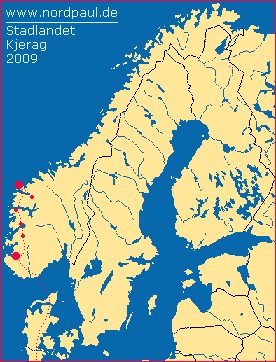
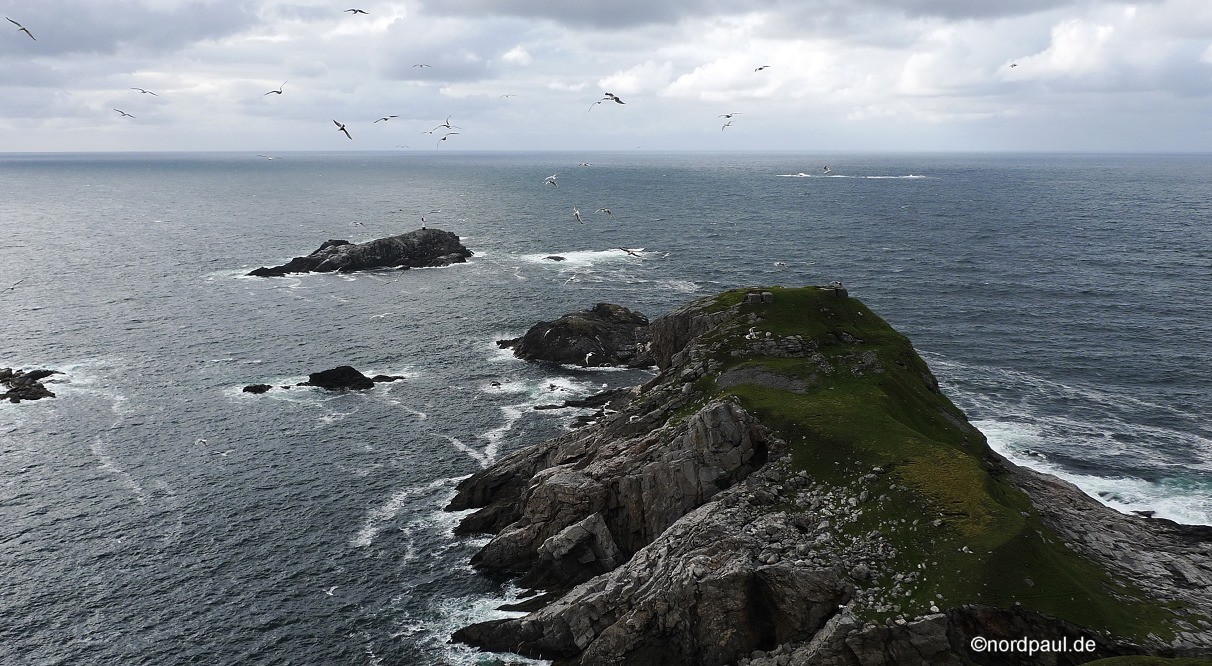
In August of 2009 I was for more than two weeks in the western parts of Norway on the road. Besides the many imposing impressions of the way there were two major natural landscapes particularly noteworthy: the remote peninsula of Stadlandet with the Vestkapp of Norway directly on the Atlantic and the plugged stone block Kjeragbolten at Kjerag next to Lysefjord.
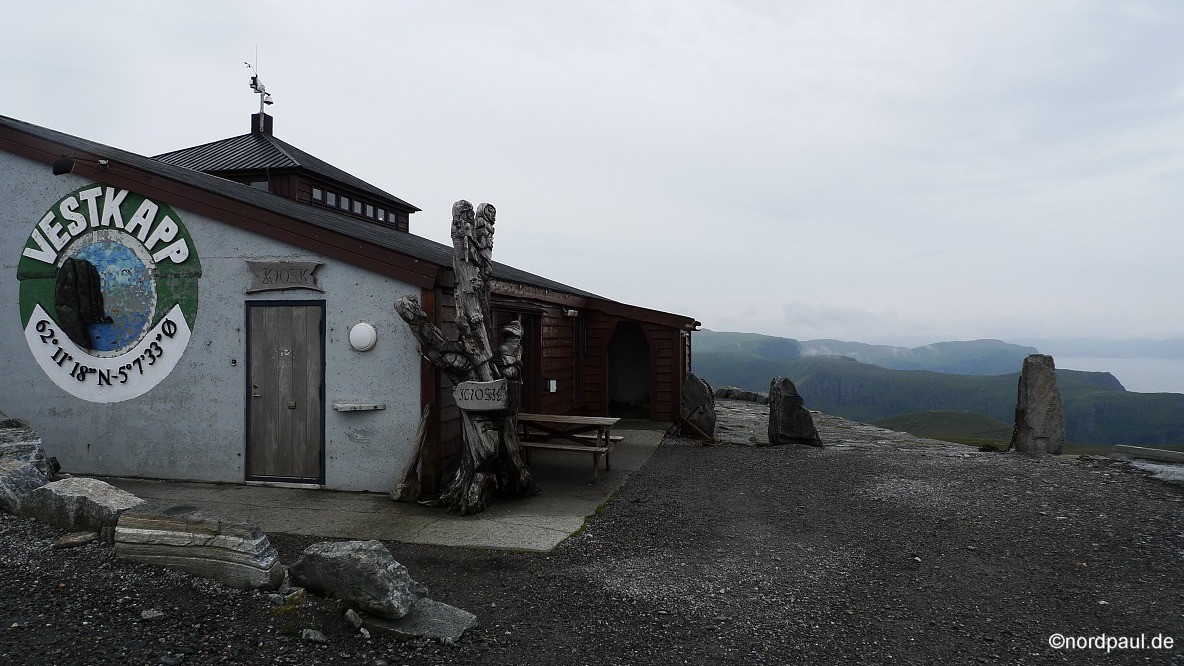
The trip north took us by car to Hirtshals, Denmark, and from there by fast ferry to Kristiansand in southern Norway. Later we took some more ferries, such as by the Hardanger Fjord. After two nights we finally reached the peninsula Stadlandet and the westernmost point of the Norwegian mainland: the Vestkapp.
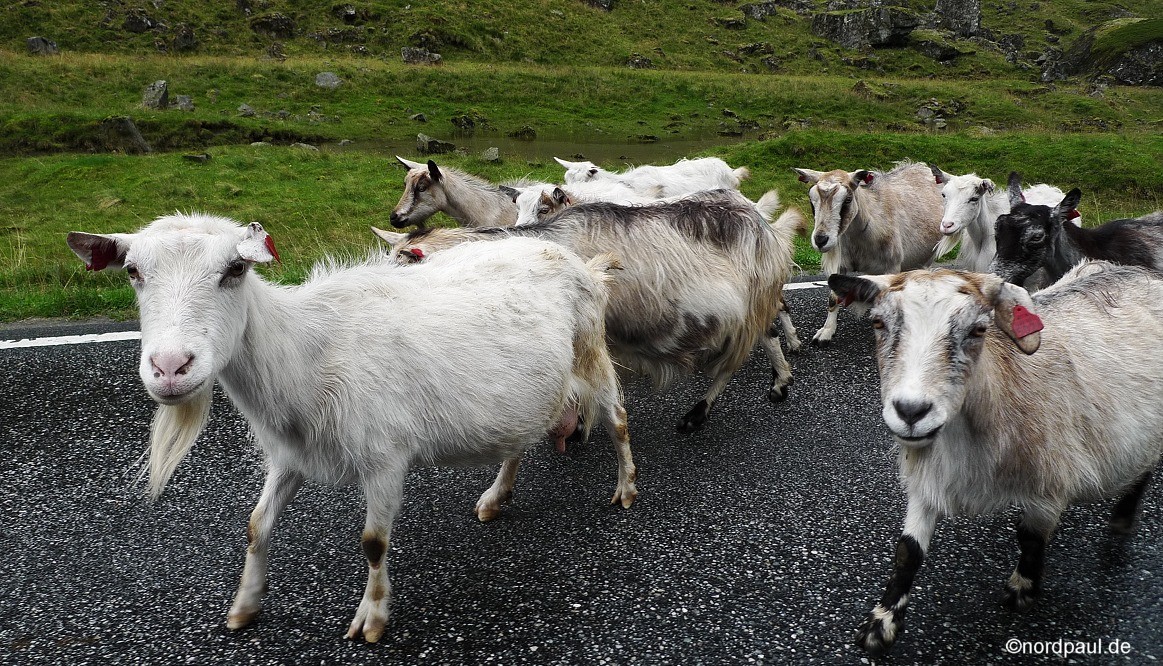
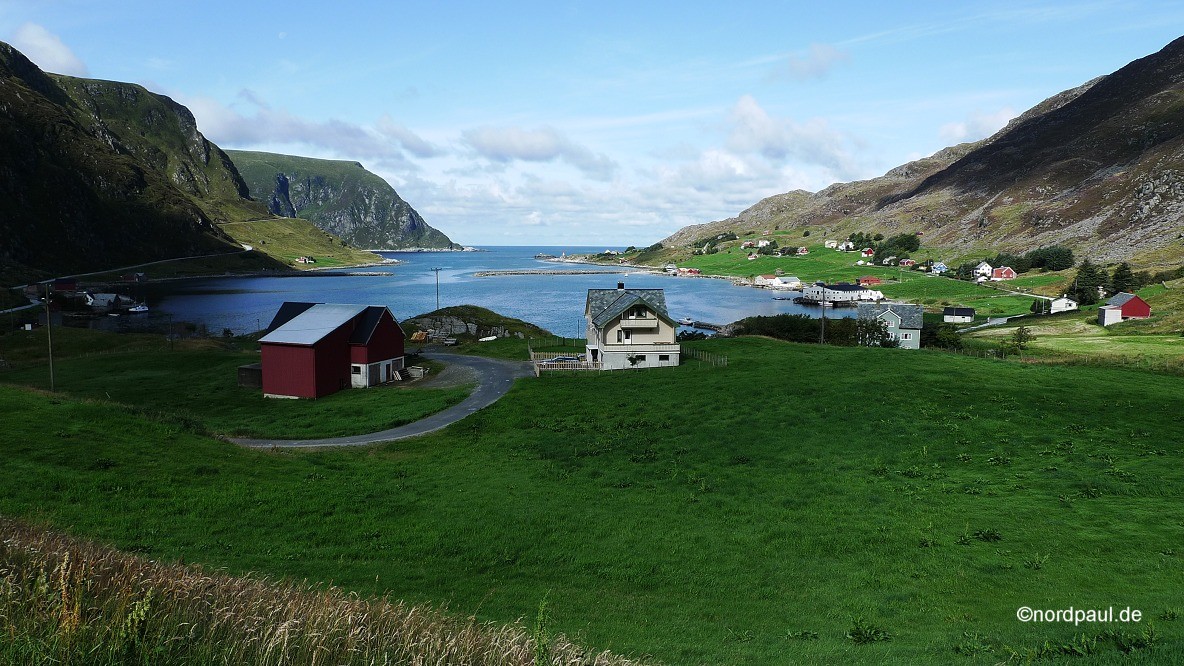
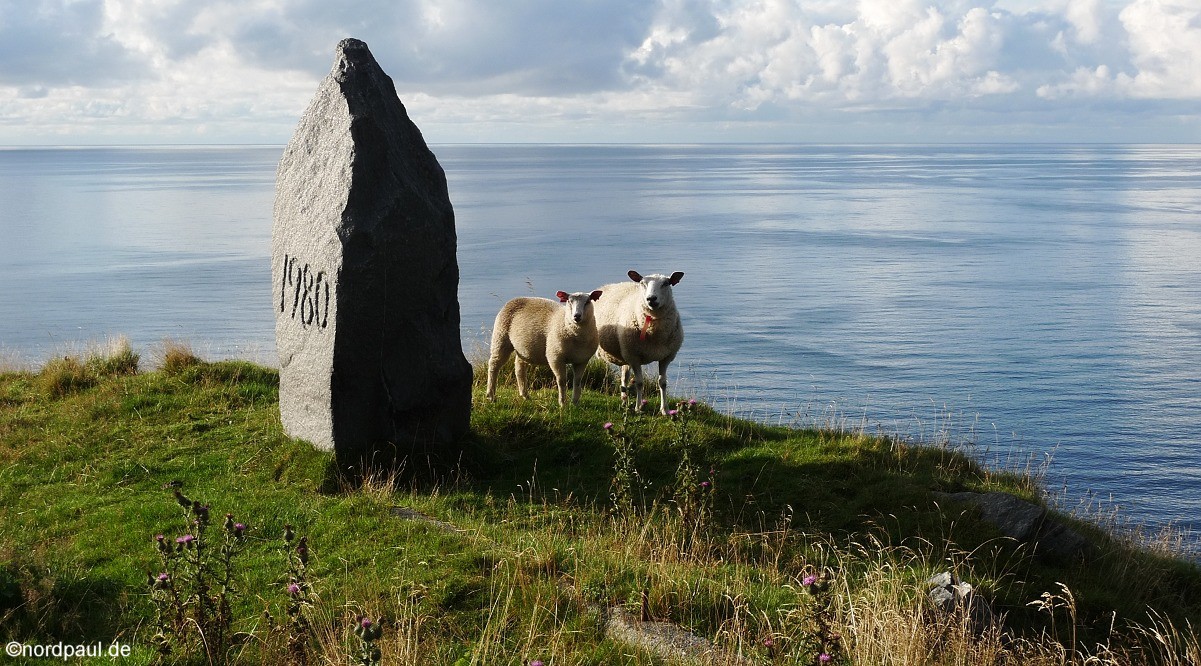
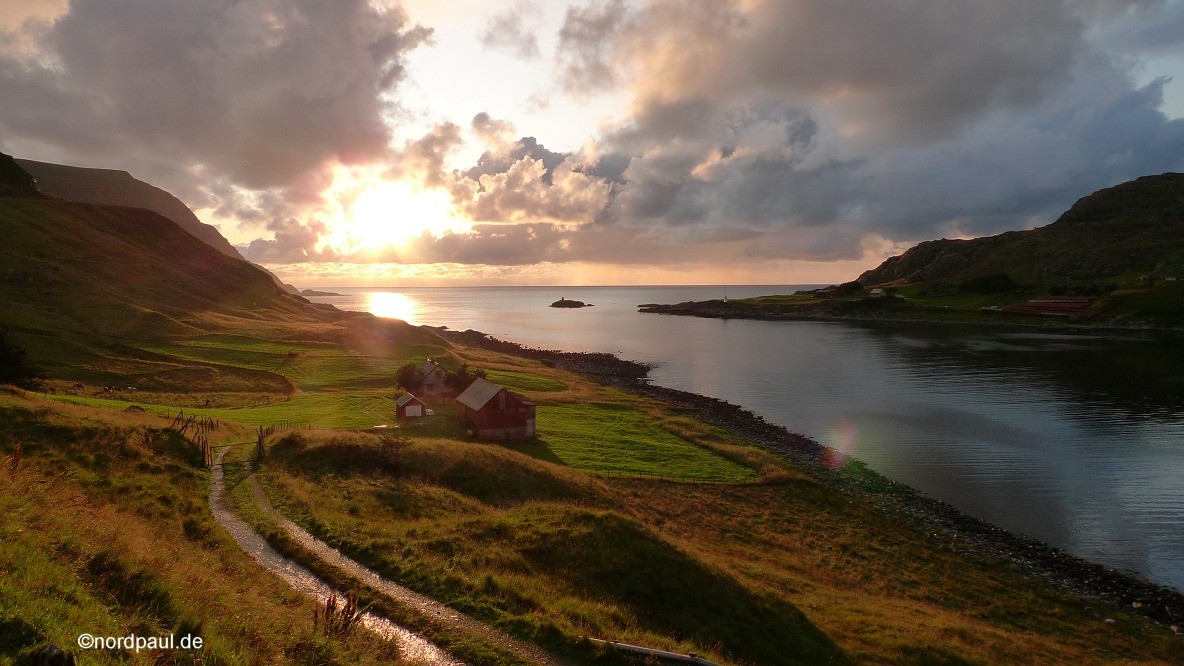
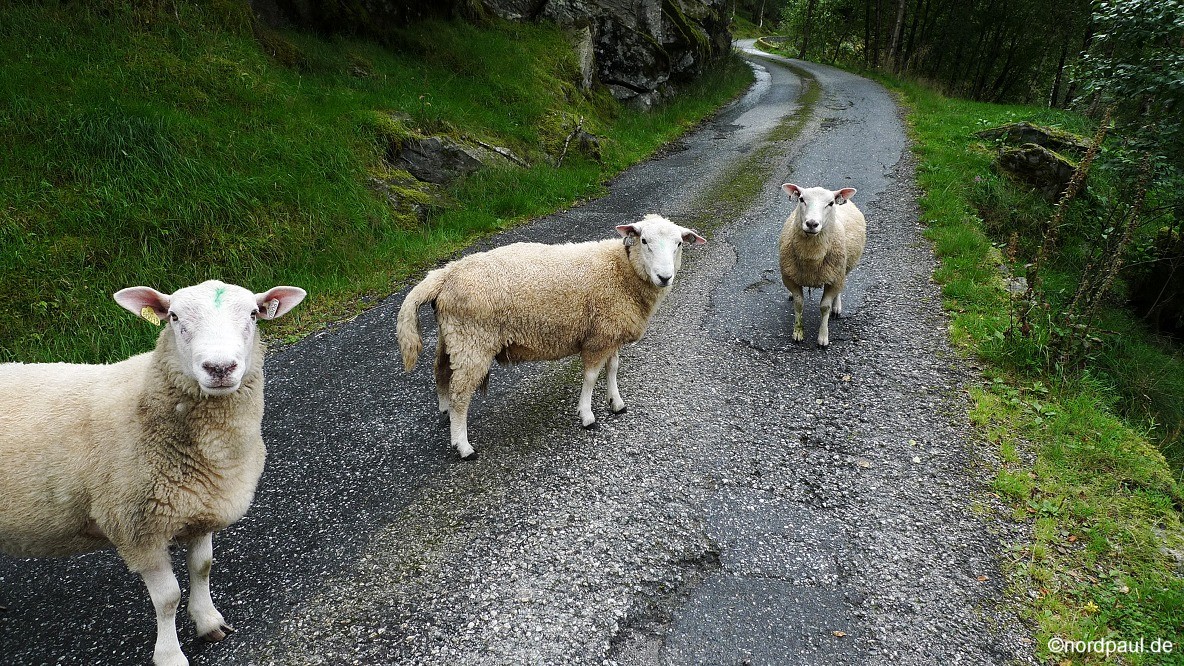
Stadlandet is part of the municipality of Selje, which is the northernmost in the Norwegian province Sogn og Fjordane. The Stadland is very sparsely populated and forested only in the valleys. Some of the 500 meters high mountains offer an excellent view. Also the many sheep on the green slopes enjoy the view. We have lived in the small settlement Honningsvåg.
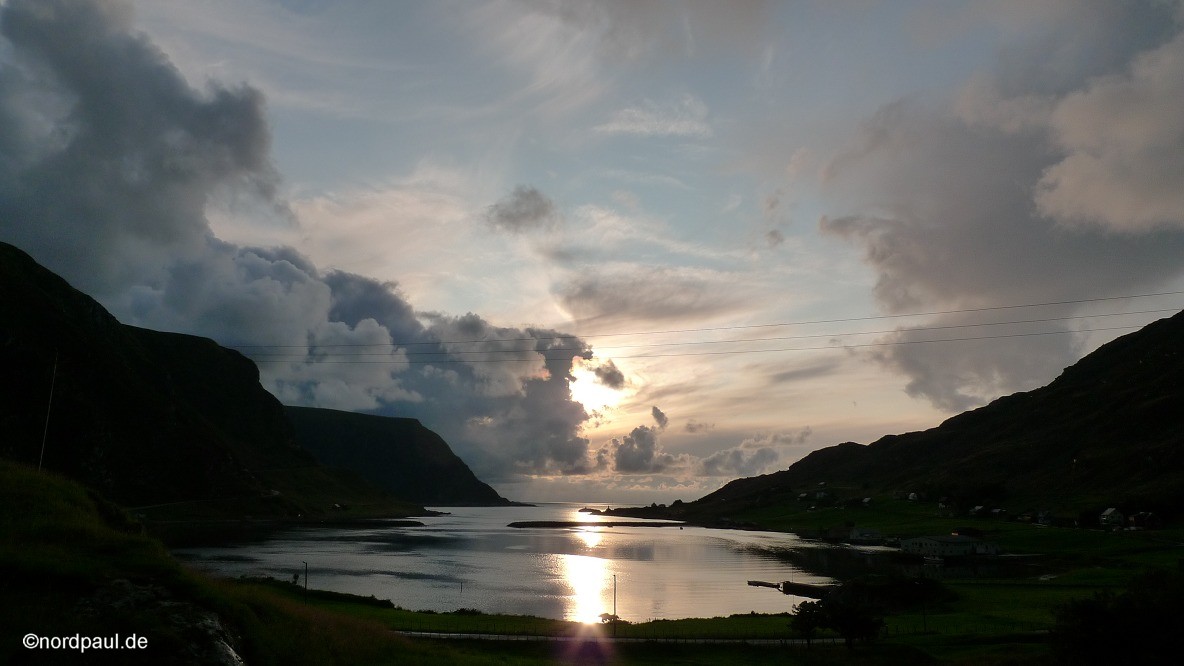
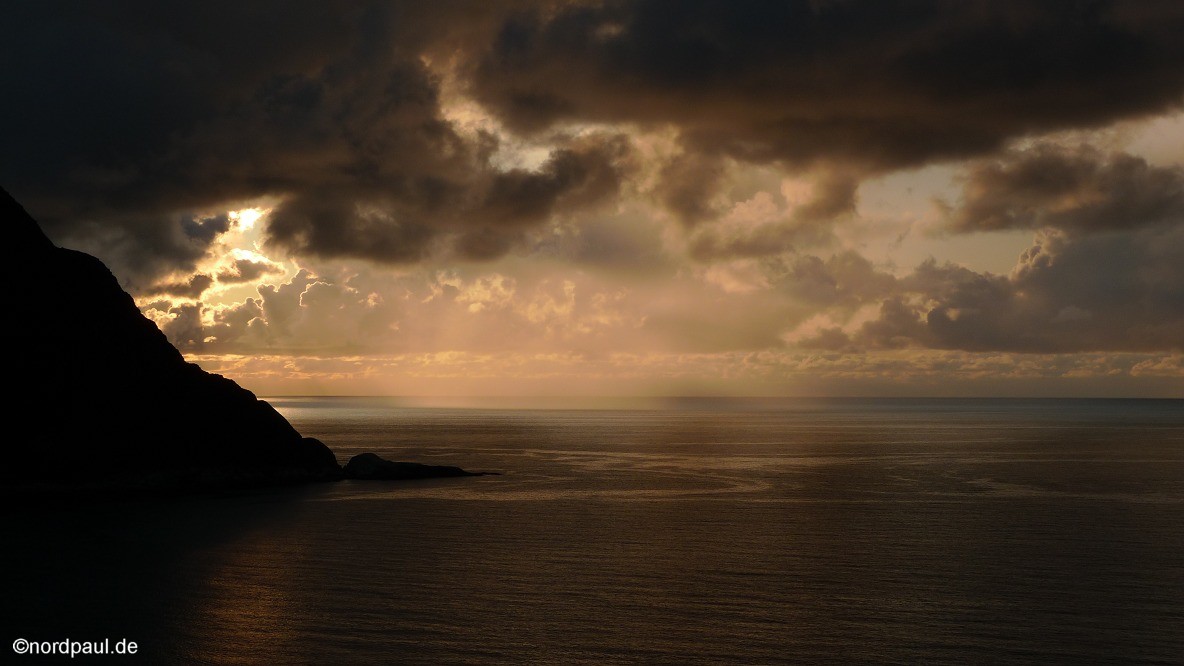
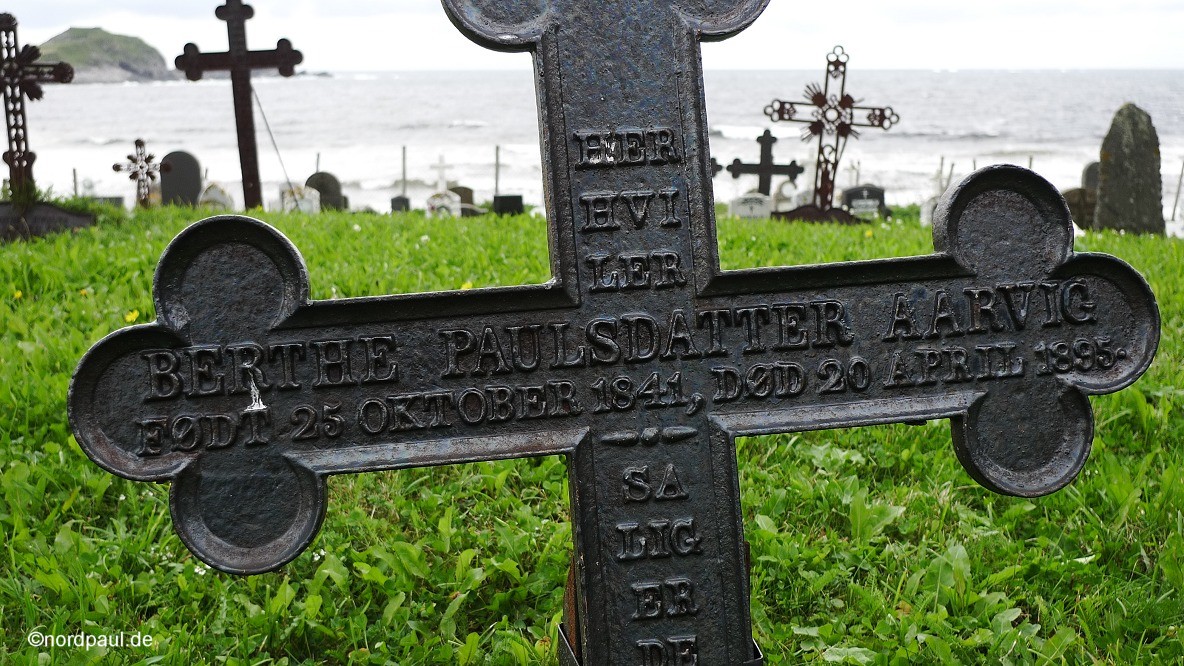
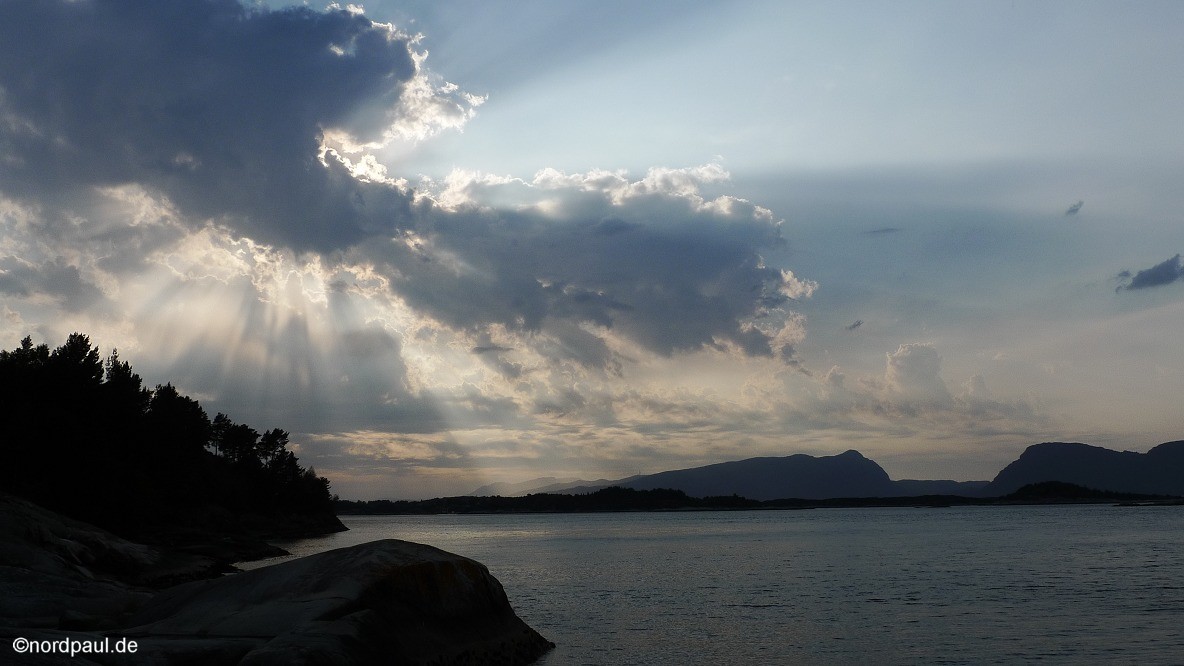
Omnipresent is the wide Atlantic who is very upset. But occasionally he can be quite quiet. Stadlandet is the area of Norway which is closest to Iceland. You see this in the cemetery of Ervik where the older names are still written like in Iceland (for example Paulsdatter = Paul's sister). And the last name is the former name of the current location (Aarvig = Ervik).
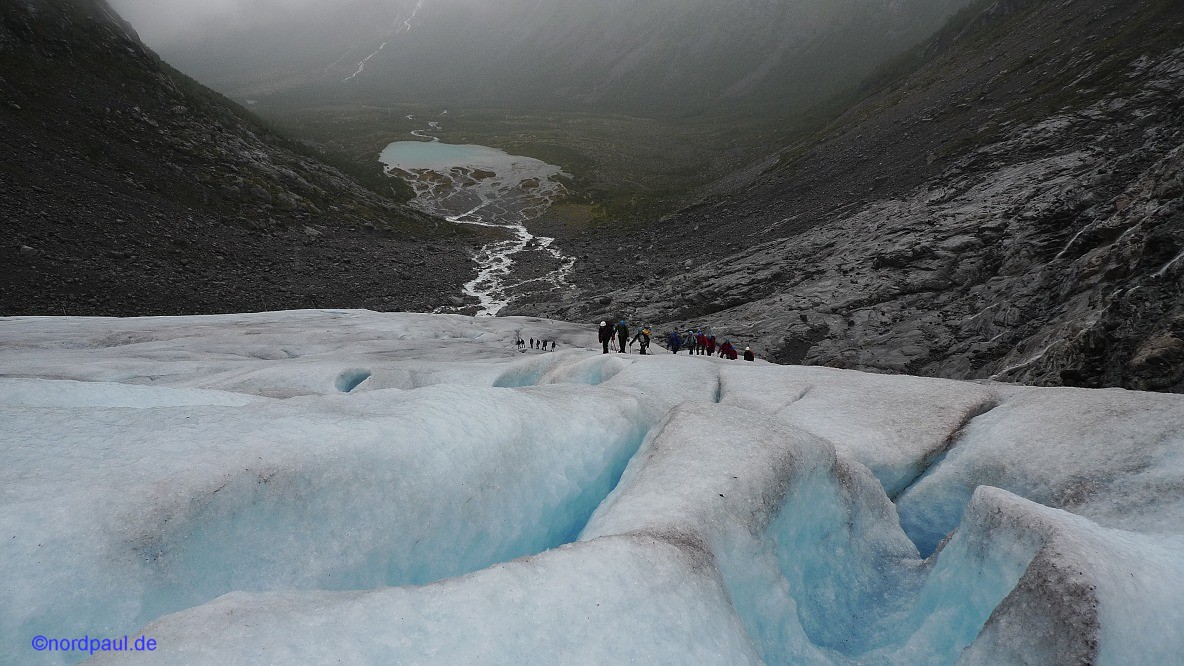
Although I had traveled in the year 1995 for the first time to Norway, on this tour in 2009 I made my first glacier hike. The weather was moderate and the experience just great. Going as a small human on a large icy glacier tongue which is only a small part of a much more powerful glacier.
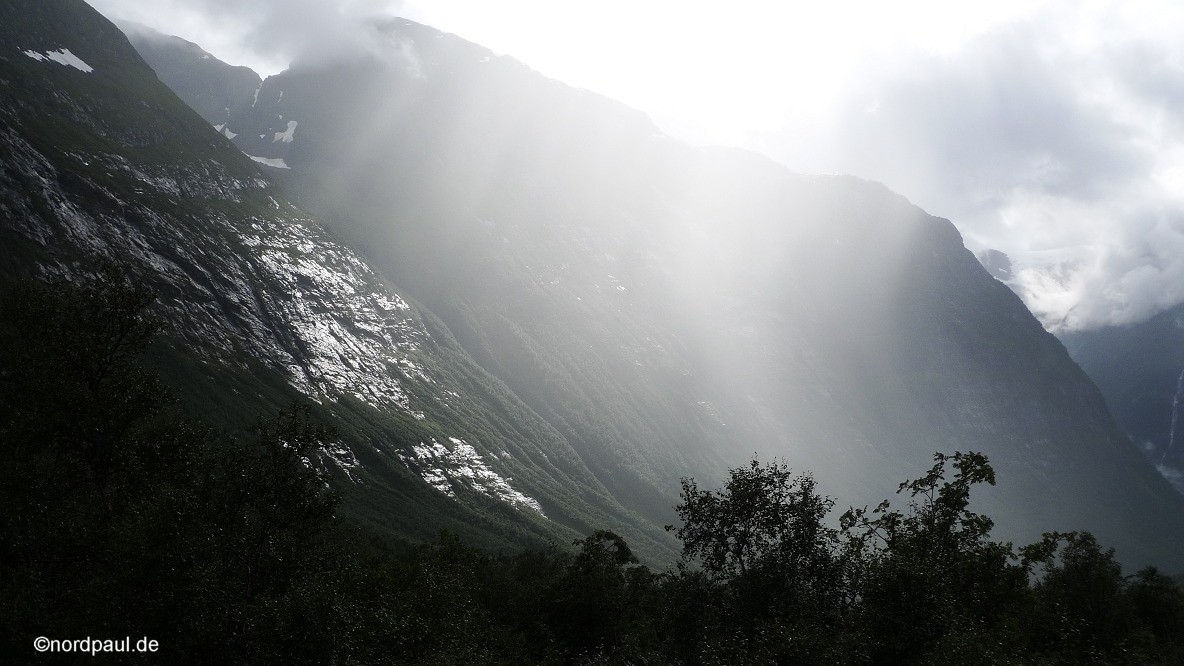
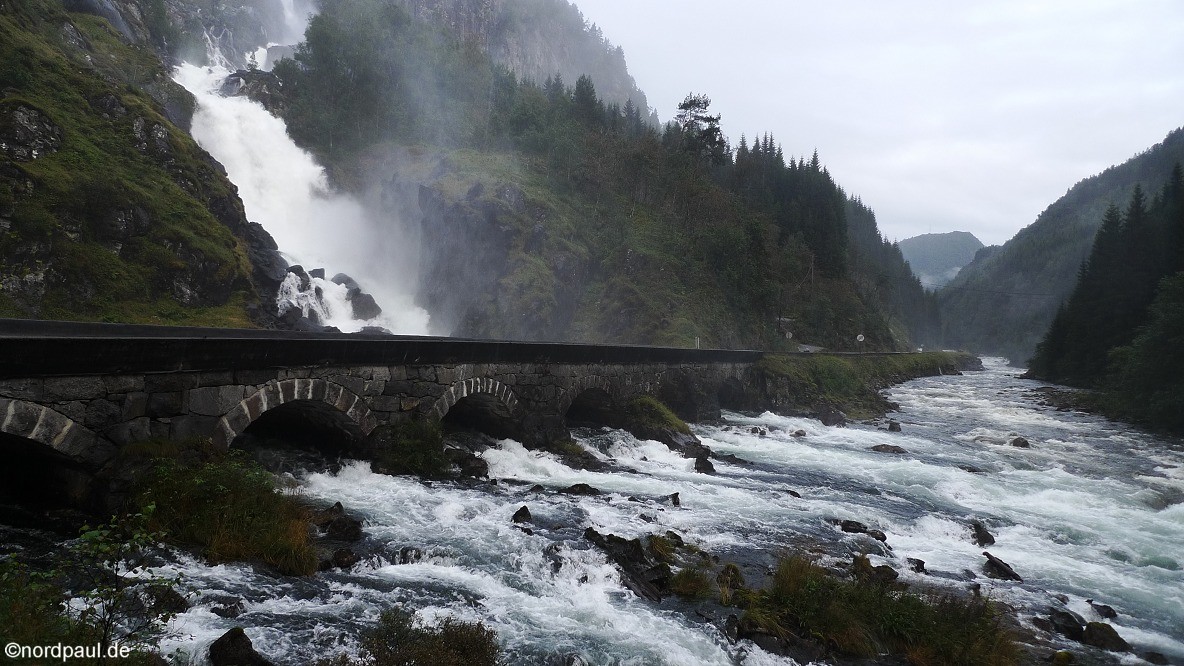
For several days we were in the western part of the Sognefjord, the largest fjord in Norway. The Låtefoss thundered down powerfully into a valley on our way back to the south.
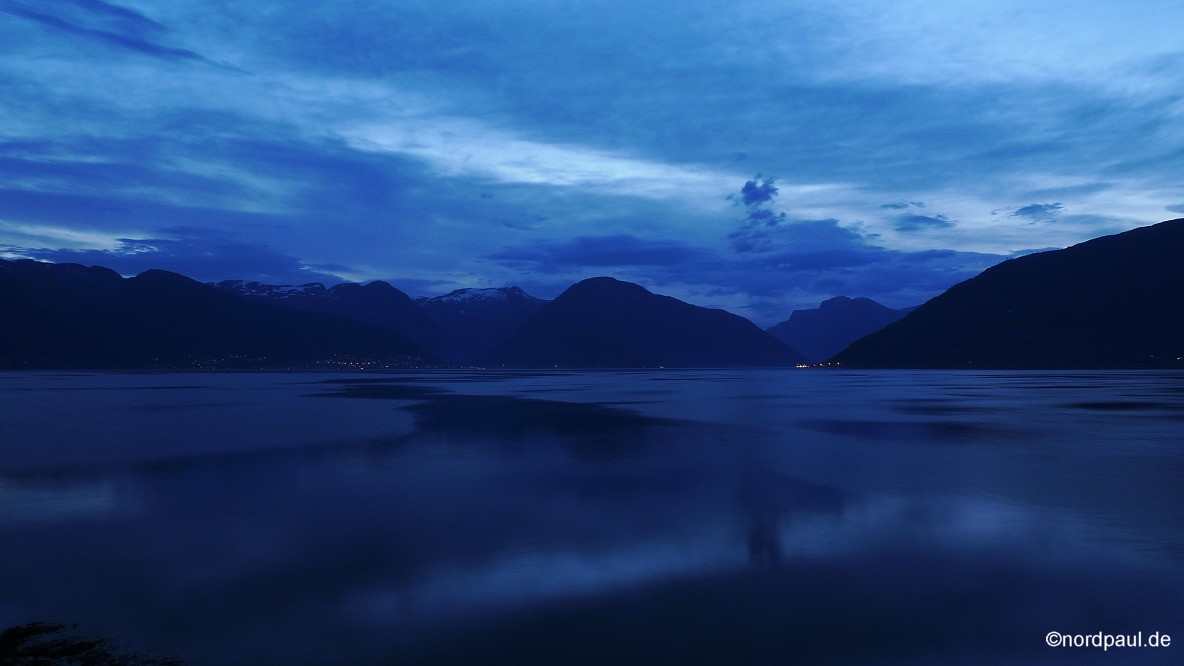
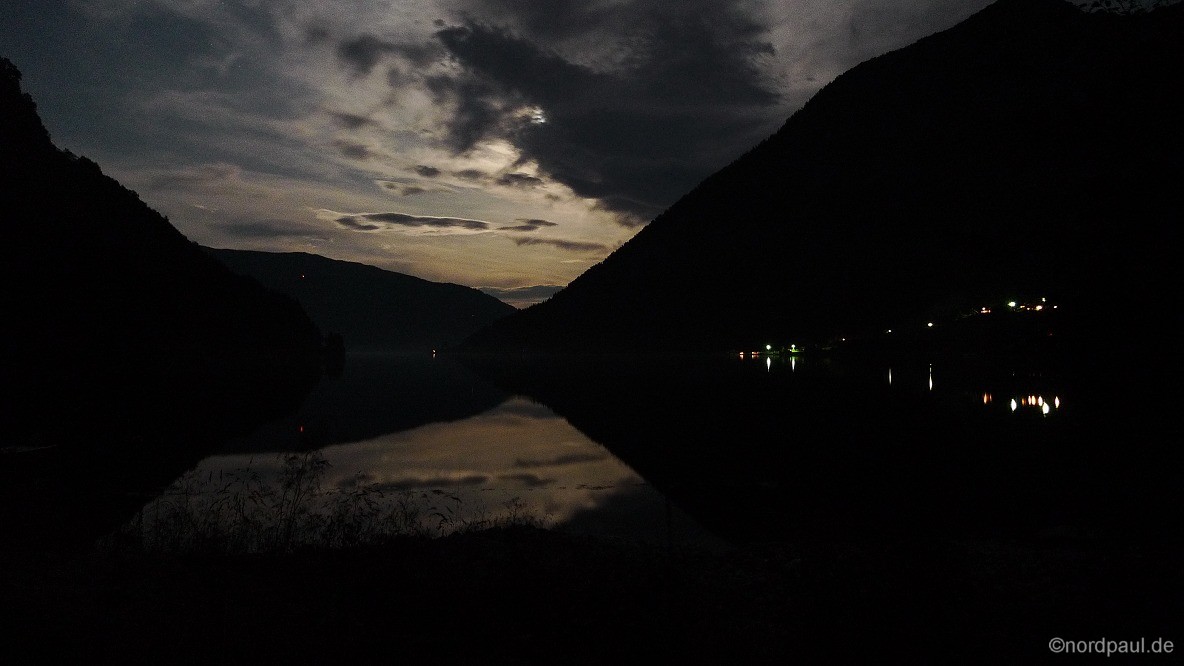
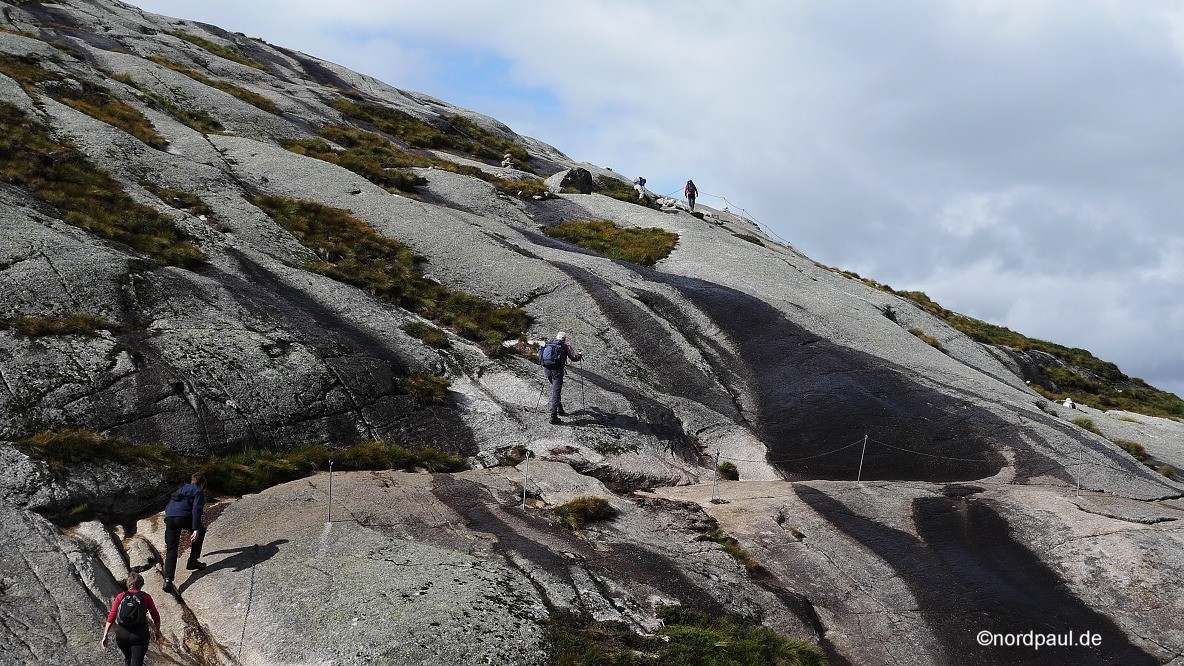
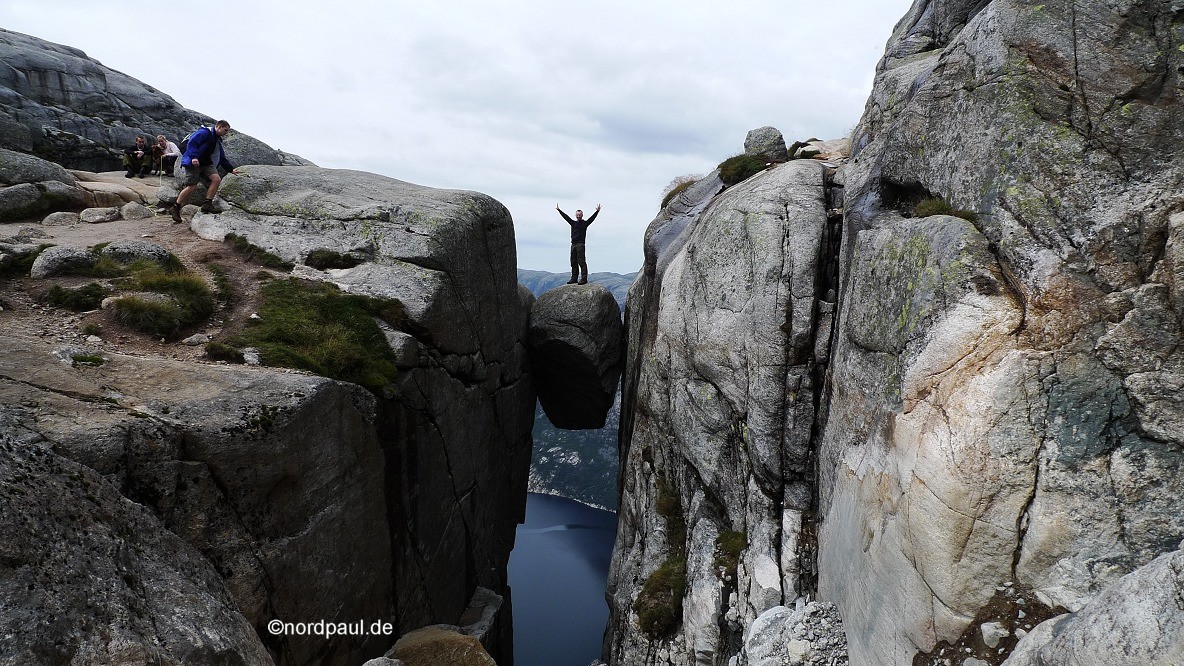
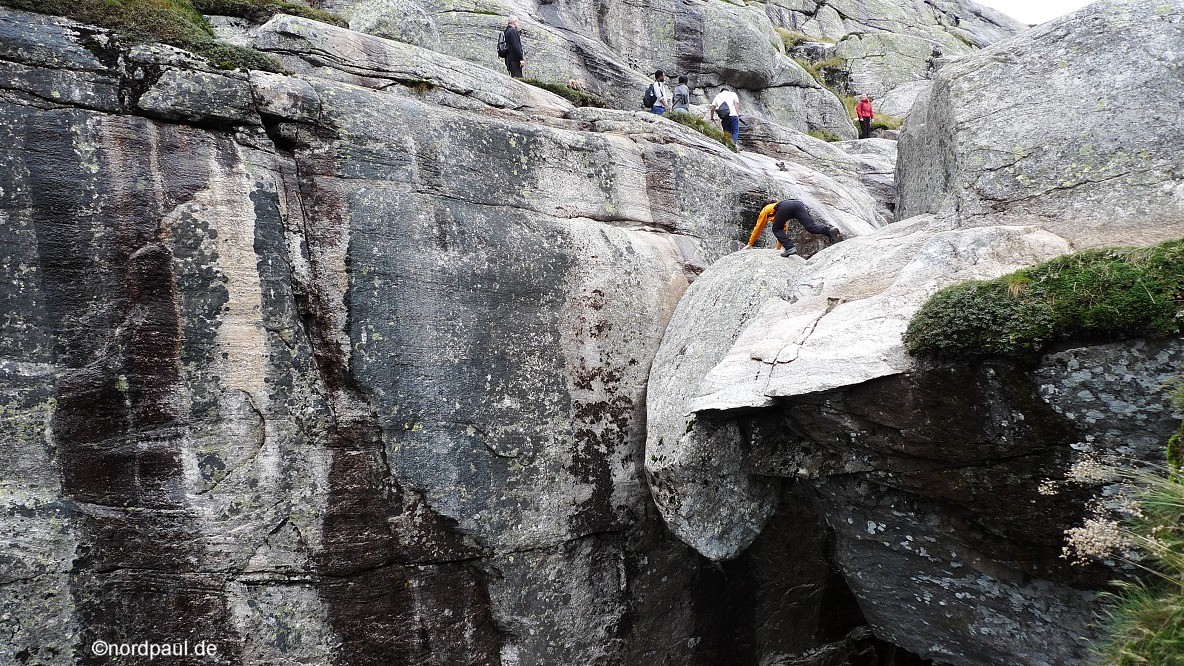
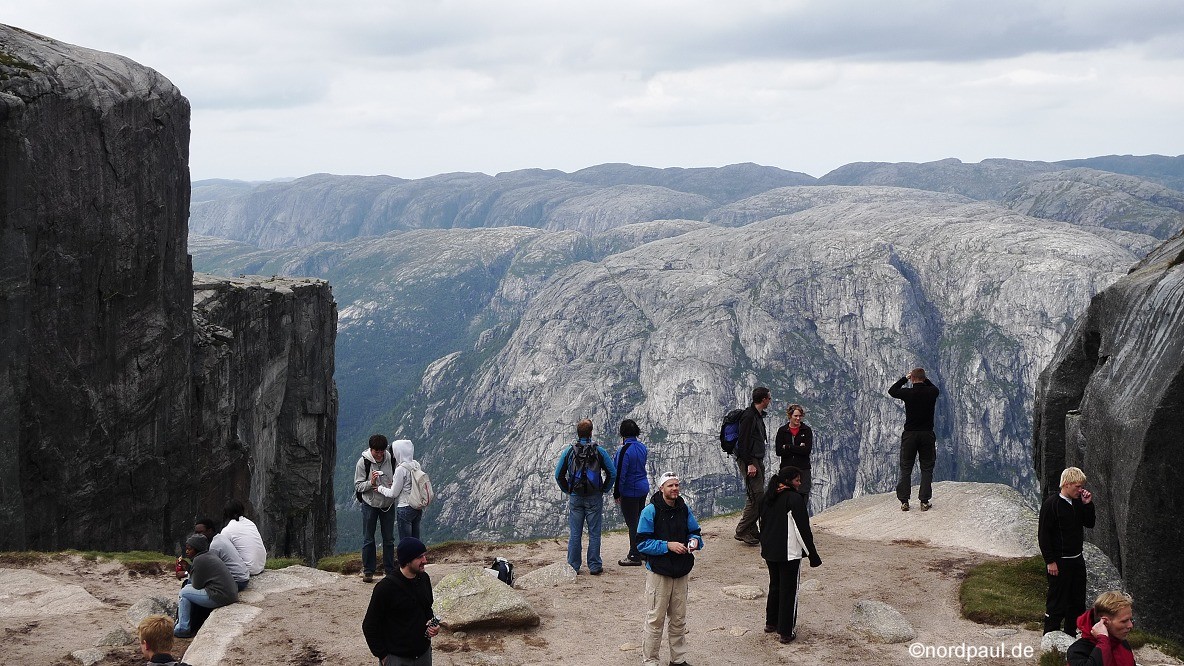
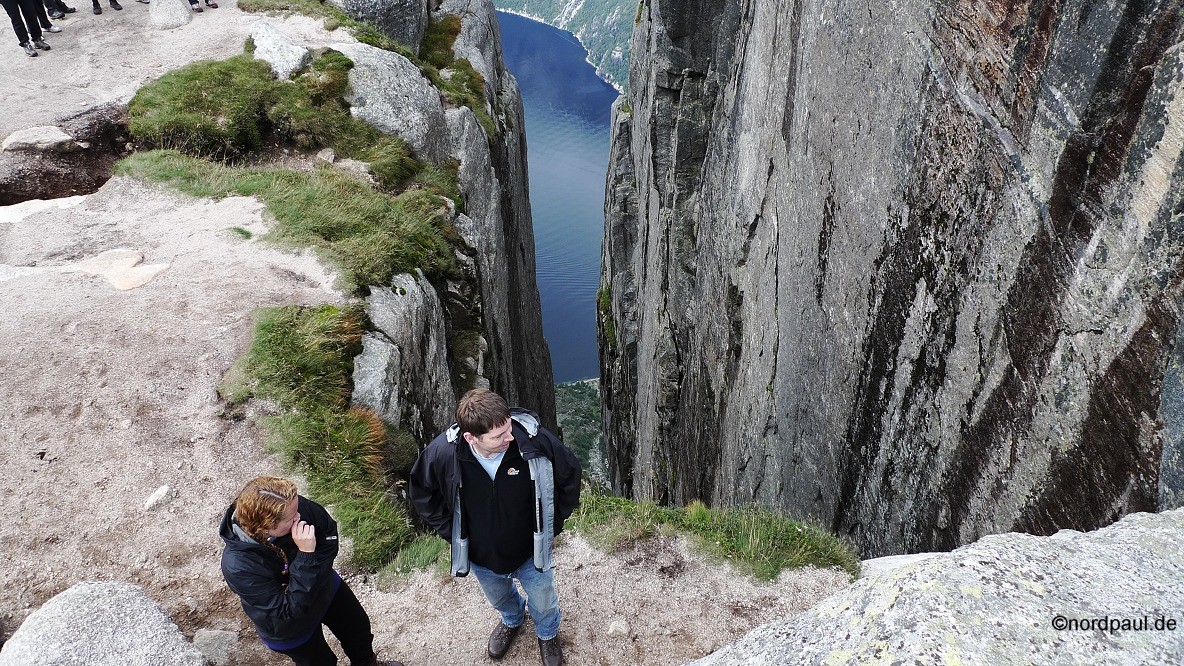
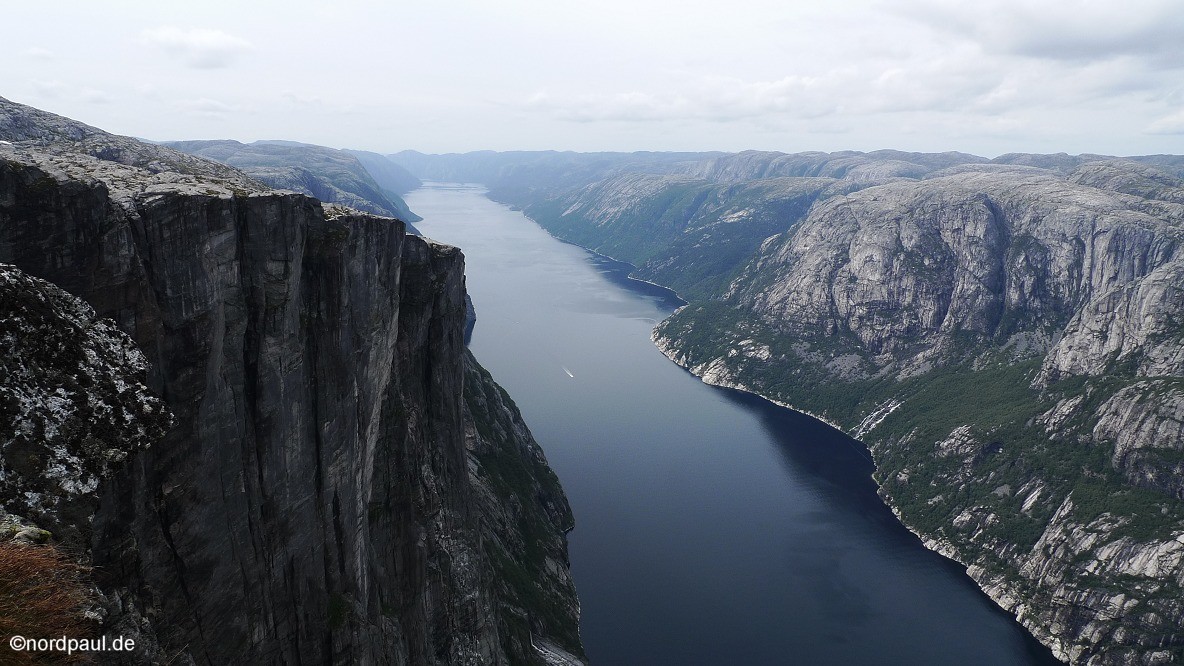
A very worthy completion of the Norway trip was the day hike to Kjerag. Along the Lysefjord (west of Stavanger) you find the mountain range Kjerag which is more than 1000 meter high. The rock is smooth, polished, but very rugged - and of course not covered by plants.
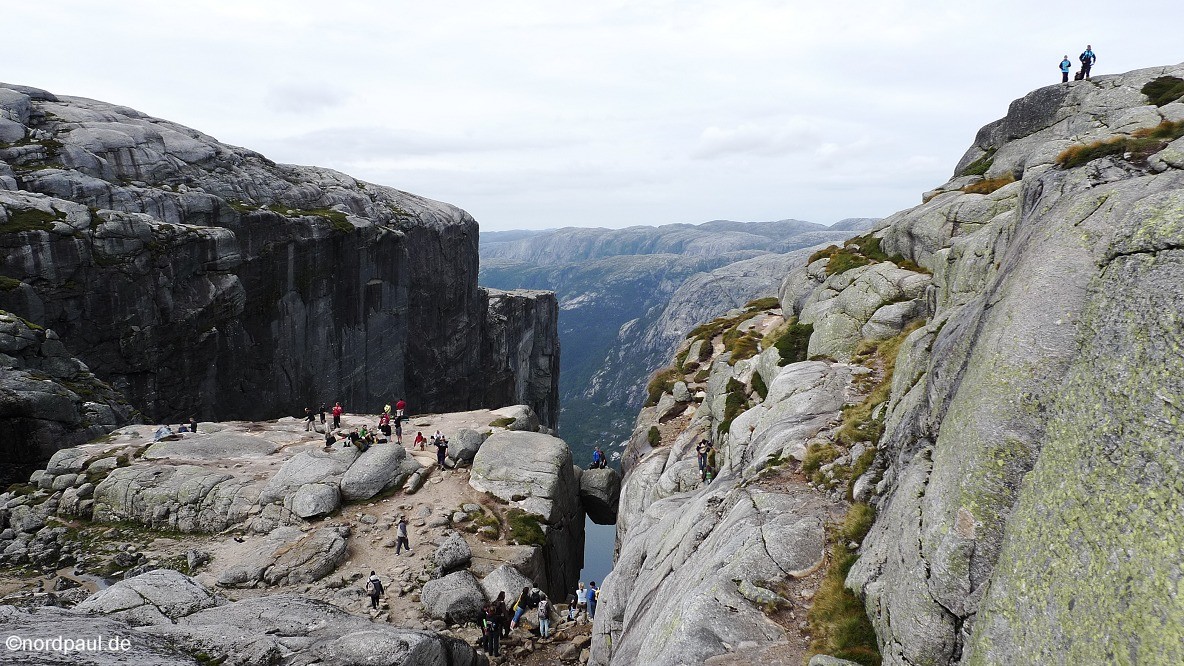
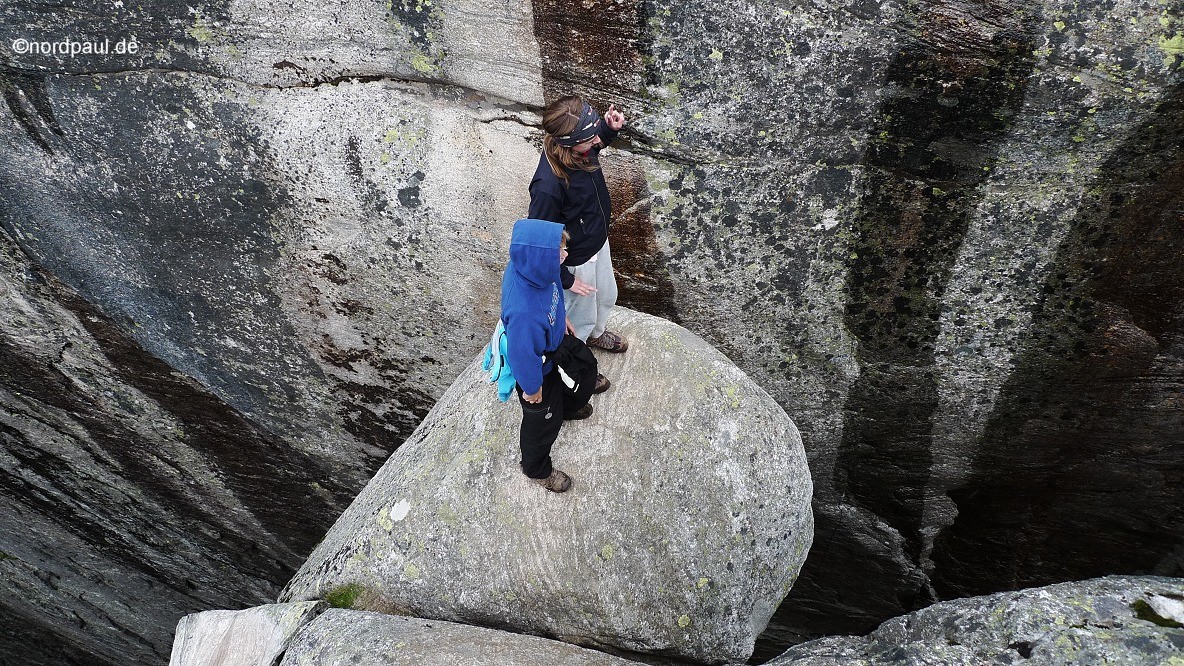
In one of the crevices a about 5 m³ large egg-shaped stone is plugged between two rocks. Below him is a small, but 715 m high waterfall (Kjeragfossen). The Lysefjord is located almost 1000 meters diagonally under the stone. The cliffs drop up to 900 meter vertically. An extreme place.
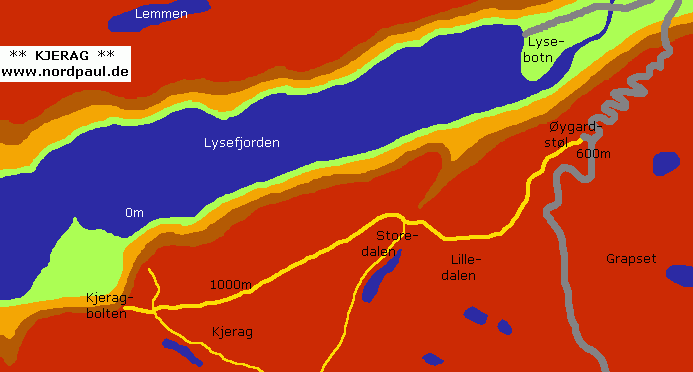
The 12 km-long hike (round trip) we completed in six hours. You will walk almost only on smooth polished rock. On some steep sections iron chains support you. In case of rain or fog it could be dangerous to walk to Kjerag. The stone is jammed strongly and in a stable way between the two walls of rock: I tested this personally by jumping on Kjeragbolten - and he remained fixed ...






 through the rocks, Norwegian website


